Tensile Roofs for Hospitals and Healthcare Facilities
Date: 6 June 2026
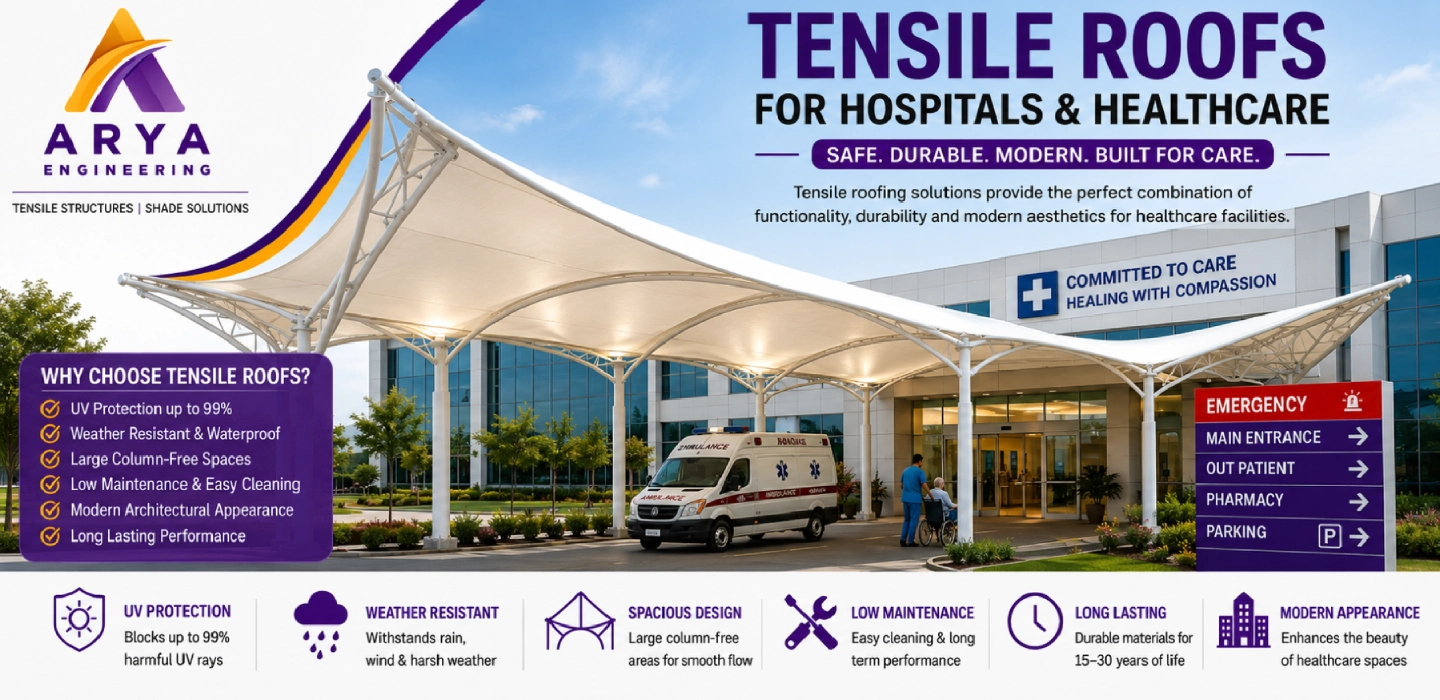
Hospitals and healthcare facilities operate 24/7, making it essential to provide safe, comfortable, and weather-protected spaces for patients, visitors, doctors, and medical staff. Outdoor areas such as hospital entrances, emergency departments, ambulance bays, waiting zones, walkways, cafeterias, and parking areas are constantly exposed to sunlight, rain, and changing weather conditions. Installing tensile roofs for hospitals and healthcare facilities is an effective way to create covered spaces that improve comfort while enhancing the overall appearance of the facility.
Unlike conventional roofing systems, tensile structures are lightweight, durable, and visually appealing. They are designed using high-strength membrane fabrics supported by galvanized steel or aluminum frameworks, allowing large covered areas without multiple support columns. Their modern architectural design, low maintenance requirements, and long lifespan make them one of the most preferred roofing solutions for healthcare infrastructure.
In this guide, the experts at Arya Engineering explain why tensile roofing systems are an ideal investment for hospitals and how to choose the right solution for your healthcare facility.
What are Tensile Roofs for Hospitals?
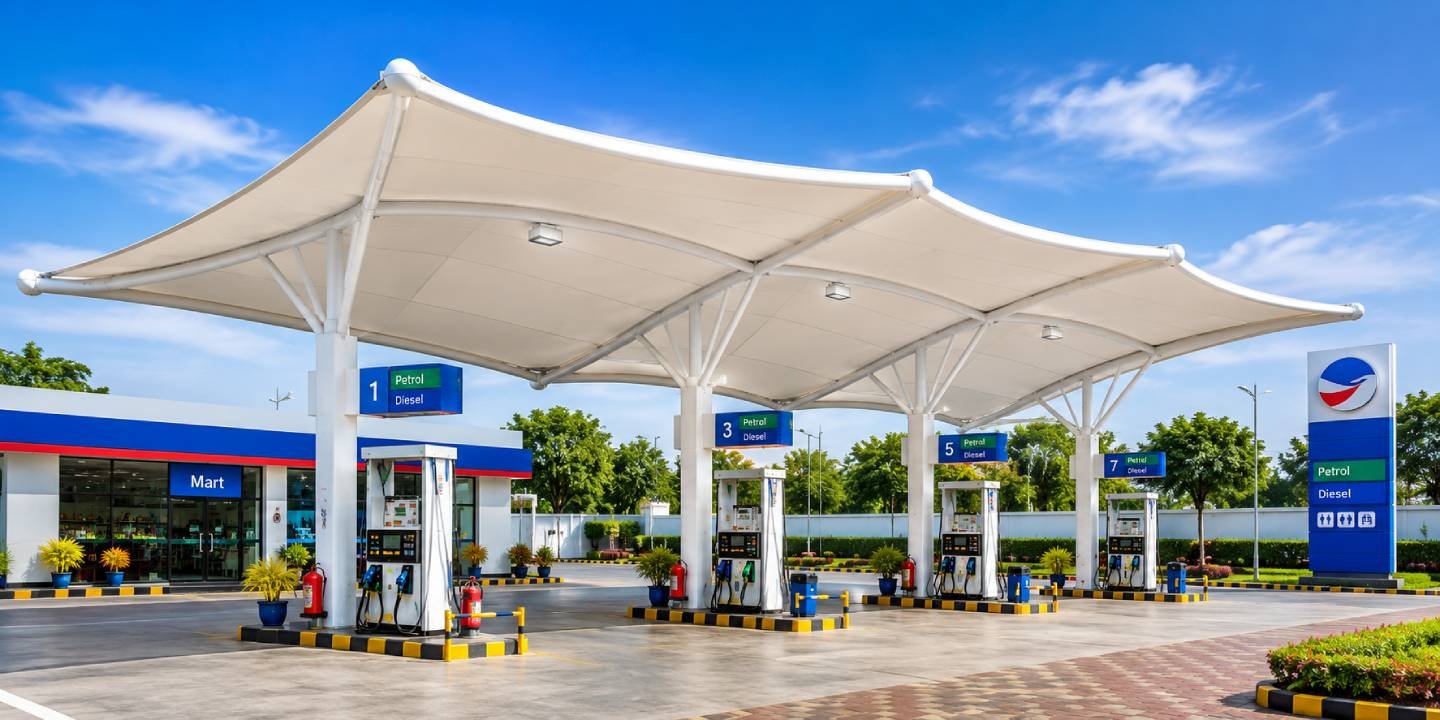
A tensile roof is a lightweight architectural roofing system made using high-strength PVC-coated polyester, PTFE-coated fiberglass, or ETFE membrane fabric stretched over a durable steel or aluminum framework. Instead of depending on heavy concrete slabs or traditional roofing materials, tensile structures use the principle of tension to create stable, strong, and aesthetically pleasing roofs.
These roofing systems are engineered to withstand harsh sunlight, heavy rainfall, strong winds, and varying environmental conditions, making them perfect for hospitals and healthcare buildings that require reliable weather protection throughout the year.
Hospitals often use tensile roofing systems to cover entrances, emergency vehicle drop-off areas, patient waiting zones, landscaped gardens, walkways, parking spaces, and outdoor seating areas.
Why Hospitals Choose Tensile Roofing Systems?
Modern hospitals are designed to provide both functionality and comfort. Patients arriving for treatment, visitors waiting outside, and medical professionals moving between departments all benefit from well-designed covered spaces. Tensile roofing systems protect these areas from excessive heat, rain, and UV radiation while allowing natural daylight and proper ventilation.
Their elegant curves and modern appearance also improve the overall architecture of healthcare buildings, creating a welcoming environment for everyone entering the facility.
If you’re looking for other healthcare shade solutions, you can also explore our Entrance Canopies, Walkway Tensile Structures, and Car Parking Tensile Structures to create a complete weather-protected hospital campus.
Benefits of Tensile Roofs for Hospitals and Healthcare Facilities
One of the biggest advantages of tensile roofing is its ability to provide excellent weather protection without compromising aesthetics. High-quality membrane fabrics block up to 95–99% of harmful UV rays, helping maintain cooler outdoor spaces for patients and visitors.
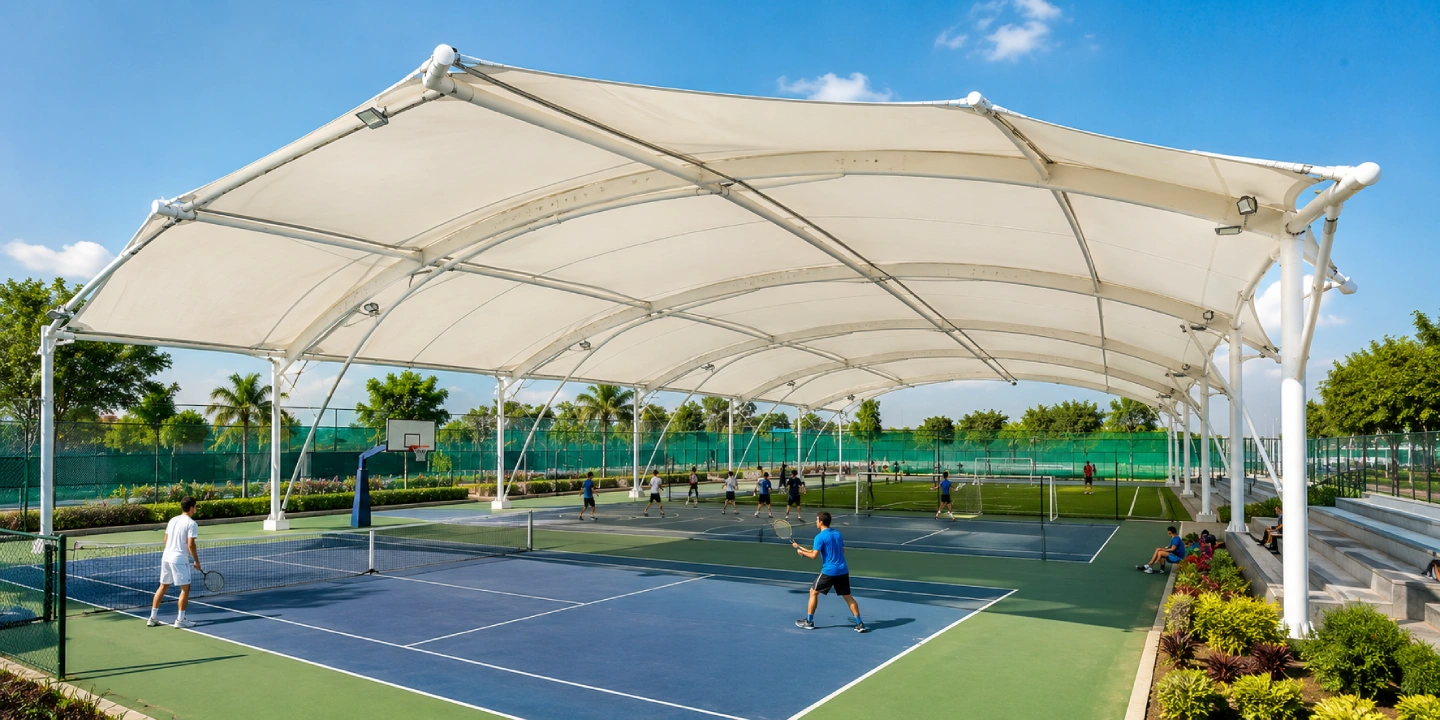
Unlike traditional roofing systems, tensile roofs create large column-free covered areas, allowing easy movement of wheelchairs, stretchers, ambulances, and medical equipment. This is especially important for emergency entrances and hospital drop-off zones where uninterrupted access is essential.
These structures are also highly durable and can withstand harsh weather conditions including heavy rainfall, strong winds, dust, and prolonged sunlight. With proper maintenance, premium tensile membranes can last between 15 and 30 years, making them a cost-effective investment.
Another major advantage is their low maintenance requirement. Routine cleaning and periodic inspections are generally enough to preserve the fabric’s appearance and structural performance for many years.
Tensile roofing systems are widely used throughout hospitals and medical campuses. Common applications include:
- Hospital Entrance Canopies
- Emergency Department Entrances
- Ambulance Bays
- Outdoor Waiting Areas
- Hospital Parking Areas
- Walkway Covers
- Pharmacy Entrances
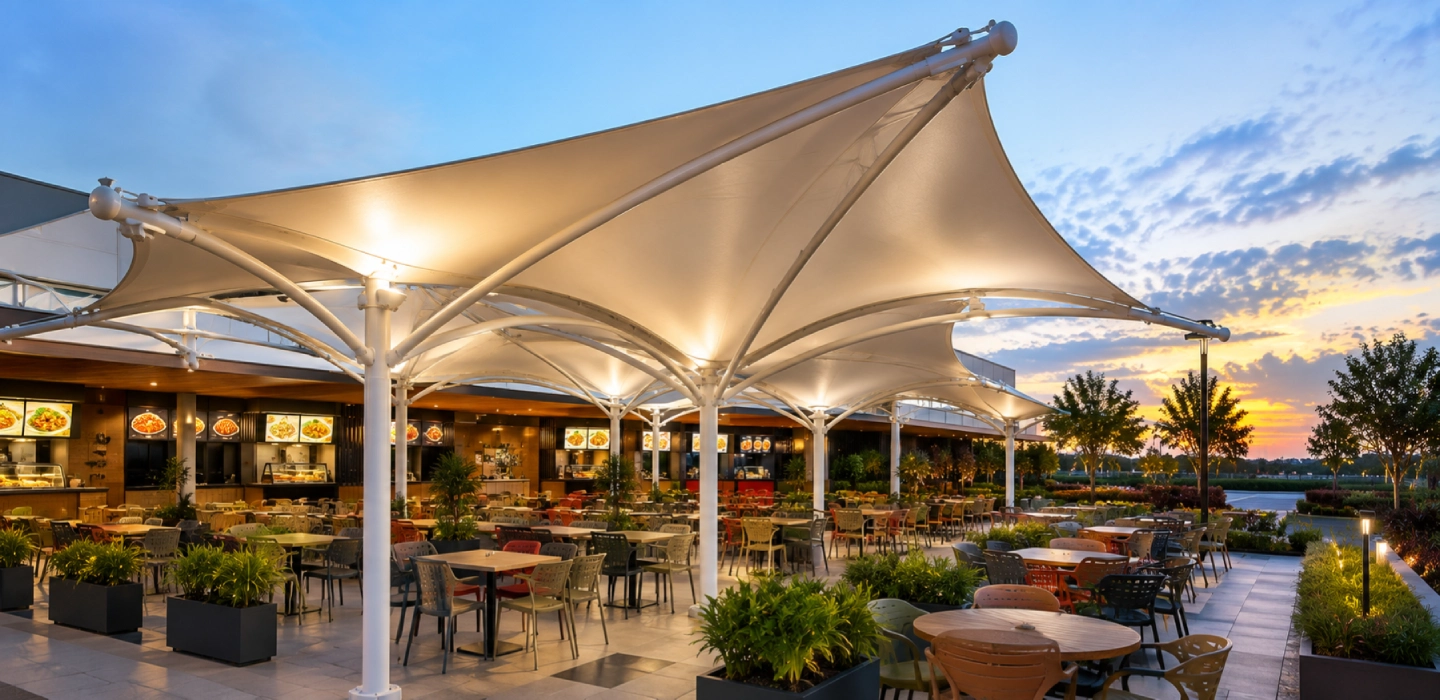
- Cafeteria Seating Areas
- Garden Resting Zones
- Medical College Campuses
- Diagnostic Centers
- Healthcare Reception Areas
Many hospitals also combine tensile roofs with Swimming Pool Shade Covers, Parking Structures, and Commercial Tensile Roofs for a consistent architectural design.
Types of Tensile Roof Designs
Hospitals can choose different tensile roof styles depending on the project requirements.
Barrel Vault Structures are ideal for long walkways, parking areas, and hospital corridors.
Conical Tensile Roofs create attractive covered spaces for waiting areas and outdoor seating.
Hypar (Hyperbolic Paraboloid) Structures provide elegant architectural designs for hospital entrances and landscaped areas.
Cantilever Tensile Roofs are commonly installed over ambulance bays and emergency vehicle drop-off zones because they offer maximum clearance without obstructing movement.
Why Choose Arya Engineering?
Arya Engineering is a trusted manufacturer and installer of premium tensile structures for hospitals, commercial buildings, educational institutions, airports, resorts, and industrial projects.
Our team offers customized tensile roofing solutions designed to meet the highest standards of safety, durability, and architectural excellence. From design and engineering to fabrication and installation, we deliver complete turnkey tensile structure solutions tailored to your project requirements.
Whether you require a hospital entrance canopy, emergency department roofing, parking shade structure, or walkway cover, Arya Engineering provides reliable and long-lasting solutions that enhance both functionality and appearance.
Conclusion:
Tensile roofs for hospitals and healthcare facilities provide the perfect combination of safety, durability, and modern architectural design. They protect patients, visitors, and healthcare professionals from harsh weather while creating comfortable, spacious, and visually appealing outdoor environments. Their lightweight construction, long service life, low maintenance requirements, and customizable designs make them an ideal roofing solution for hospital entrances, emergency departments, parking areas, walkways, and waiting zones.
Investing in a professionally designed tensile roofing system not only improves operational efficiency but also enhances the overall experience for everyone visiting the healthcare facility. With expert engineering, premium materials, and customized designs, Arya Engineering delivers reliable tensile roofing solutions that are built to perform for decades.
Frequently Asked Questions (FAQ)
What are tensile roofs for hospitals?
Tensile roofs are lightweight roofing systems made from high-strength fabric membranes supported by steel or aluminum frameworks.
Are tensile roofs suitable for hospitals?
Yes. Tensile roofs offer UV protection, rain shelter, natural ventilation, and spacious column-free covered areas, making them ideal for hospitals and healthcare facilities.
How long do hospital tensile roofs last?
High-quality PVC-coated tensile roofs generally last 15–20 years, while premium PTFE membrane structures can last 30 years or more with proper maintenance.