How Wind, Rain & UV Resistance Make Tensile Structures Last Longer
18 August 2026
How Wind, Rain & UV Resistance Make Tensile Structures Last Longer
What Are Tensile Structures?
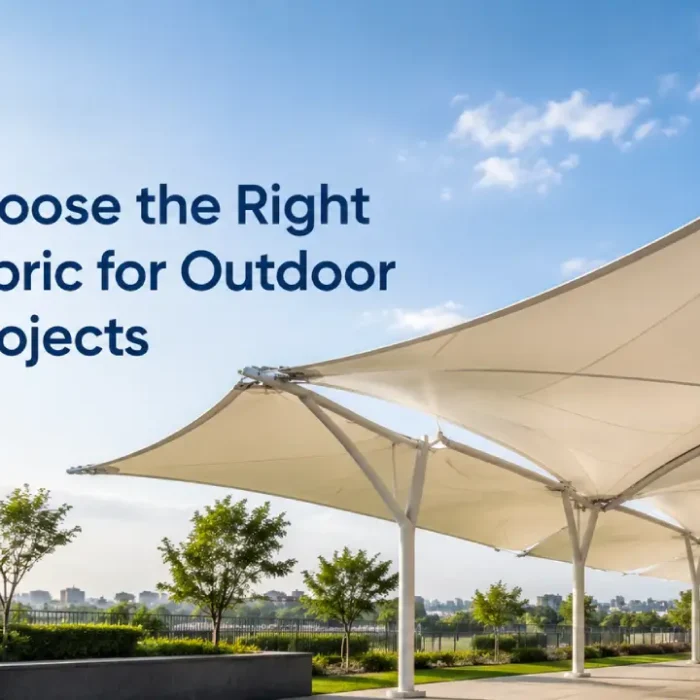
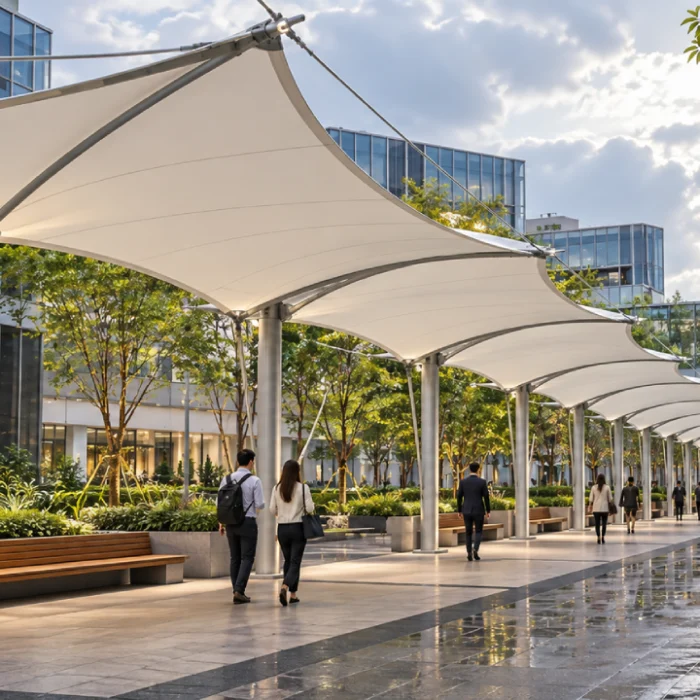
Tensile structures are widely used for car parking shades, walkways, entrance canopies, terraces, stadiums, swimming pools, playgrounds, and commercial spaces. Their lightweight design and modern appearance make them an effective roofing and shading solution.
However, long-term performance depends on more than the appearance of the structure. Wind resistance, rain protection, UV resistance, quality materials, proper engineering, installation, and maintenance all contribute to the durability of a tensile structure.(https://en.wikipedia.org/wiki/Tensile_structure?utm_source)
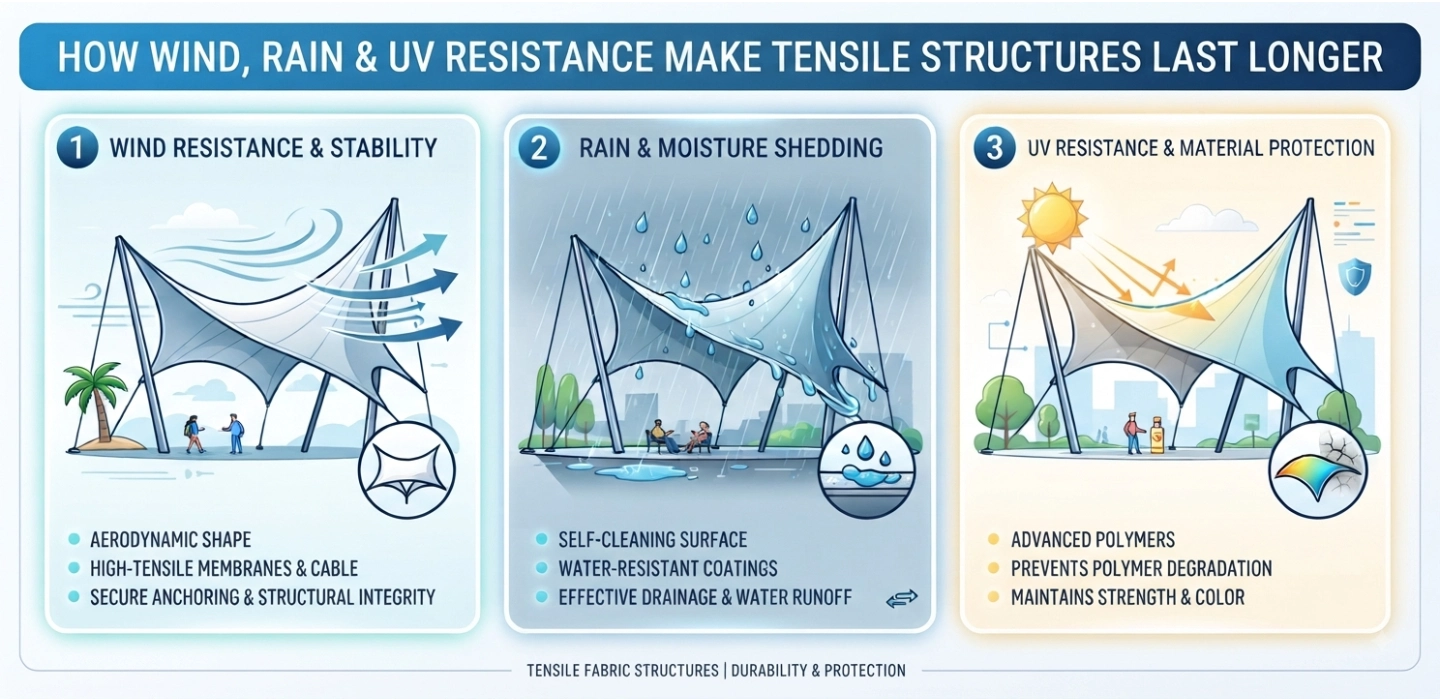
1. Wind Resistance Provides Structural Stability
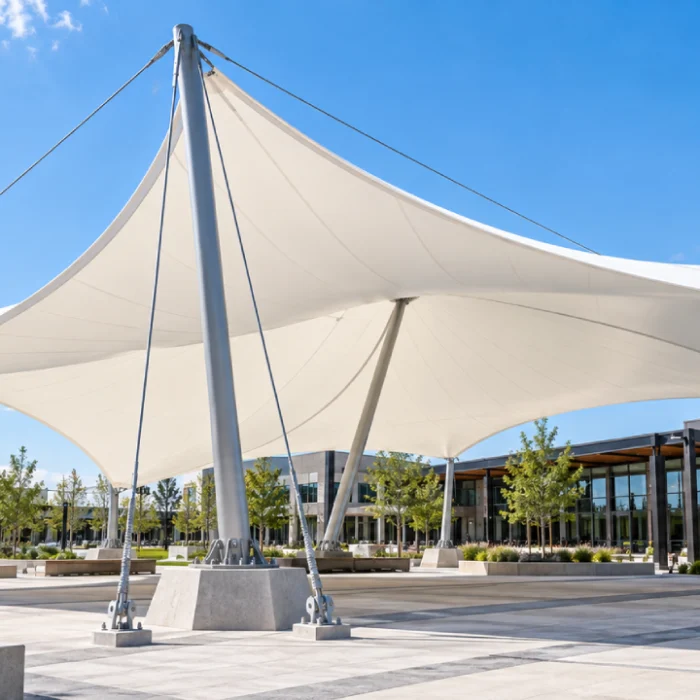
Wind is one of the most important environmental factors considered while designing a tensile structure. The membrane is stretched and supported by a carefully engineered combination of steel frameworks, cables, anchors, and foundations.
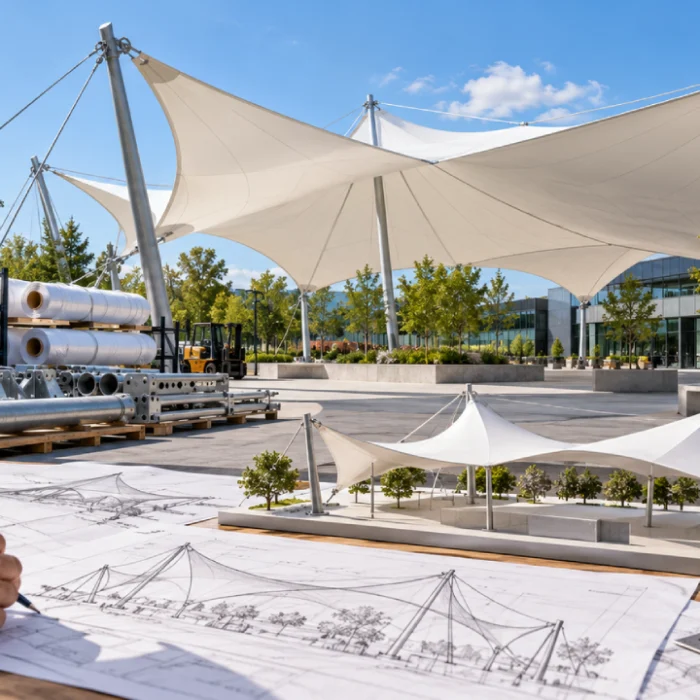
Proper structural calculations and wind-load analysis help ensure that the structure can handle the expected environmental loads. Arya Engineering states that its design process includes structural calculations, wind and load simulations, and finite element analysis (FEA).
Benefits of wind-resistant design include:
- Better structural stability
- Reduced excessive membrane movement
- Protection against deformation and tearing
- Improved performance during strong winds
- Longer service life
2. Rain Resistance Helps Prevent Water Damage
Tensile membranes are designed with suitable shapes and slopes that allow rainwater to drain efficiently. Proper drainage prevents water from accumulating on the membrane.
High-quality tensile fabrics can provide weatherproofing and water resistance, making them suitable for outdoor applications. Arya Engineering uses membrane materials such as PVC-coated polyester and PTFE-coated glass fiber for applications requiring weather resistance.
Proper rainwater drainage helps:
- Prevent water accumulation
- Reduce unnecessary membrane loading
- Protect the covered area
- Maintain membrane performance
- Reduce maintenance requirements
3. UV Resistance Protects Against Sun Damage
Tensile structures are continuously exposed to sunlight, especially in outdoor applications. Prolonged UV exposure can gradually affect certain materials.
UV-resistant membrane fabrics help reduce the impact of long-term sunlight exposure. Materials such as PTFE-coated fiberglass and PVC-coated polyester can be selected according to the project’s performance requirements.
UV-resistant tensile structures can help:
- Reduce premature material degradation
- Maintain appearance for longer
- Provide protection from harmful UV radiation
- Improve long-term outdoor performance
- Reduce the need for frequent replacement
4. Material Selection Affects Service Life
The membrane material plays an important role in determining the performance and lifespan of a tensile structure.
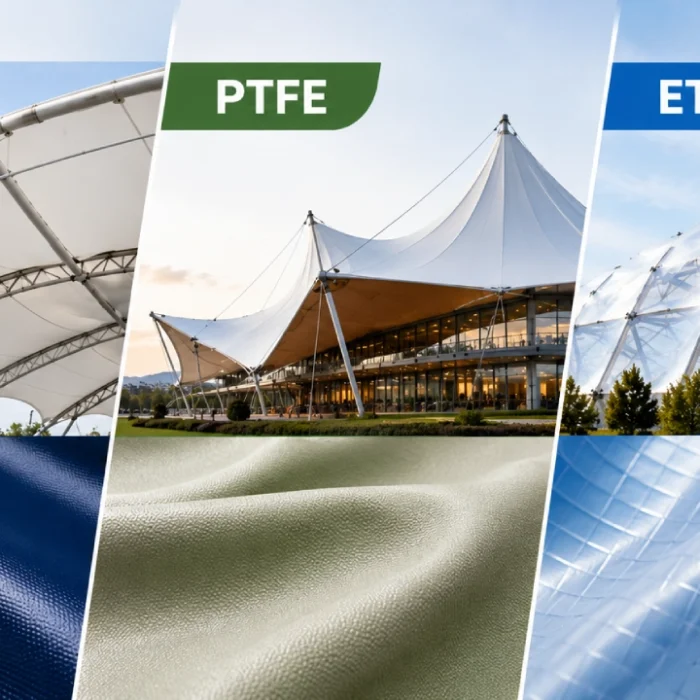
Common membrane options include:
- PVC-coated polyester
- PTFE-coated fiberglass
- ETFE
Each material has different characteristics related to durability, UV resistance, weather resistance, transparency, flexibility, and application suitability.
Arya Engineering works with PVC, PTFE, and ETFE membrane options for different tensile roofing applications.
Why Choose Arya Engineering for Tensile Structures?
Arya Engineering provides complete tensile structure solutions, including design, engineering, fabrication, installation, and maintenance. The company states that it has more than 10 years of experience in tensile membrane structures and follows quality checks throughout its process.
1. Experienced Engineering Team
Arya Engineering has a team of designers, engineers, fabricators, and installation professionals experienced in handling different types of tensile structures.
2. Structural Engineering & Load Analysis
The company incorporates structural calculations, wind-load simulations, and FEA into its design process to improve structural stability and performance.
3. Quality Membrane Materials
Arya Engineering selects materials such as PTFE-coated glass fiber and PVC-coated polyester, considering properties such as UV resistance, tensile strength, fire resistance, and weatherproofing.
4. Complete Project Execution
From design and fabrication to installation, Arya Engineering provides an integrated approach to tensile structure projects. Its portfolio includes car parking shades, terrace covers, entrance canopies, stadium structures, playground shades, airport shades, walkways, and other applications.
5. Projects Across Different Applications
Arya Engineering has completed tensile structure projects for industrial, commercial, educational, residential, hospitality, and architectural applications.
Conclusion
Wind, rain, and UV exposure are unavoidable challenges for outdoor structures. A properly engineered tensile structure combines weather-resistant membrane materials, structural stability, effective drainage, UV protection, professional installation, and regular maintenance to achieve reliable long-term performance.
Choosing an experienced tensile structure manufacturer such as Arya Engineering can help ensure that the design, material selection, engineering, fabrication, and installation are handled professionally.
Frequently Asked Questions (FAQ)
1. How do tensile structures withstand strong winds?
Tensile structures use pretensioned membranes, steel frameworks, cables, anchors, and engineered foundations to distribute environmental loads effectively.
2. Are tensile structures suitable for heavy rain?
Yes. Properly designed tensile structures use suitable membrane geometry and drainage systems to direct rainwater away from the structure.
3. Can UV rays damage tensile structures?
Long-term UV exposure can affect materials, but UV-resistant membrane fabrics help reduce degradation and maintain long-term outdoor performance.
4. Which materials are used for tensile structures?
Common materials include PVC-coated polyester, PTFE-coated fiberglass, and ETFE. The appropriate material depends on the project’s requirements.
5. How long does a tensile structure last?
The service life depends on the membrane material, design, environmental conditions, installation quality, and maintenance. Some tensile roofing applications can offer long-term service when properly designed and maintained. Arya Engineering lists a 15–30 year lifespan for its terrace tensile roofing applications, depending on the system and conditions.