PVC vs PTFE vs ETFE Tensile Fabrics: Which One Is Best for Your Project?
26 August 2026
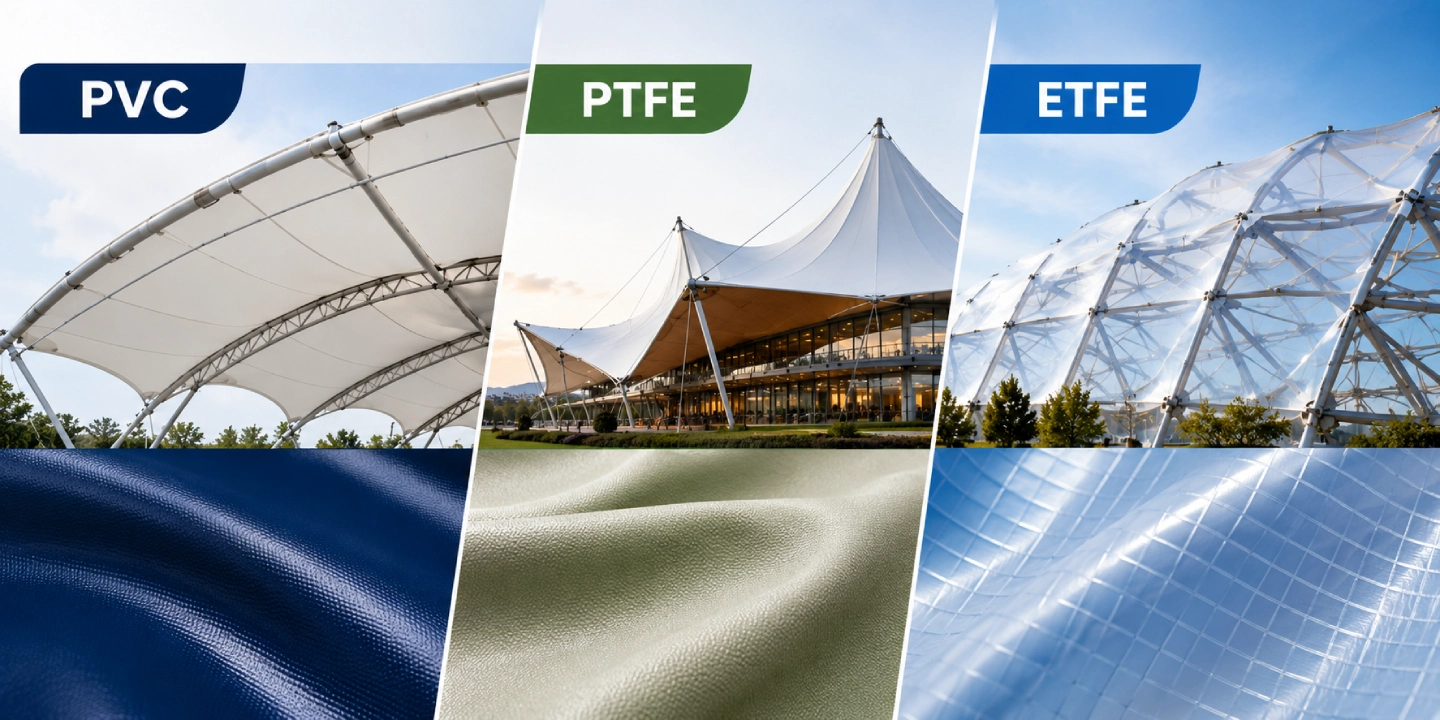
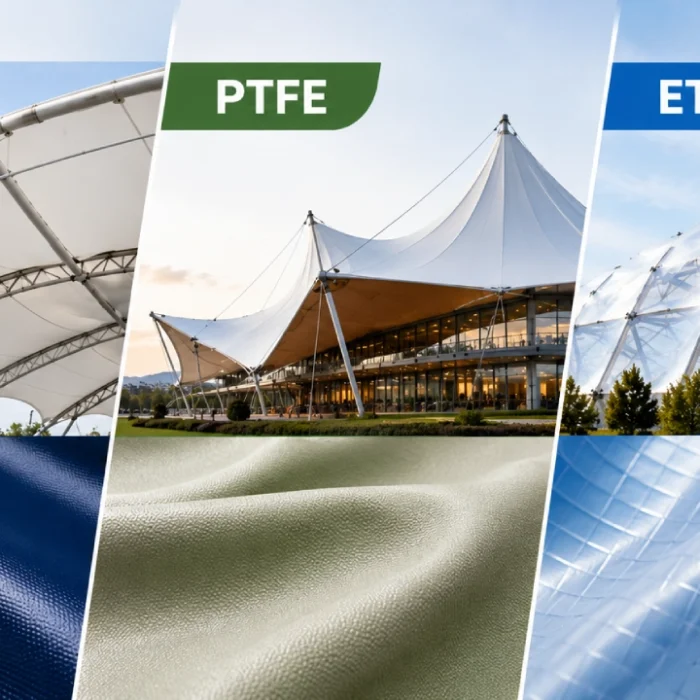
PVC vs PTFE vs ETFE Tensile Fabrics Difference
Tensile fabric structures have become a preferred solution for modern architecture because they are lightweight, durable, and visually appealing. From stadium roofs and airport terminals to commercial canopies and skylights, choosing the right membrane material plays a crucial role in the performance and lifespan of the structure.
The three most widely used materials are PVC (Polyvinyl Chloride), PTFE (Polytetrafluoroethylene), and ETFE (Ethylene Tetrafluoroethylene). Each material has unique advantages depending on your project’s budget, design requirements, durability expectations, and light transmission needs.Tensile Structure (https://en.wikipedia.org/wiki/Tensile_structure?utm_source)
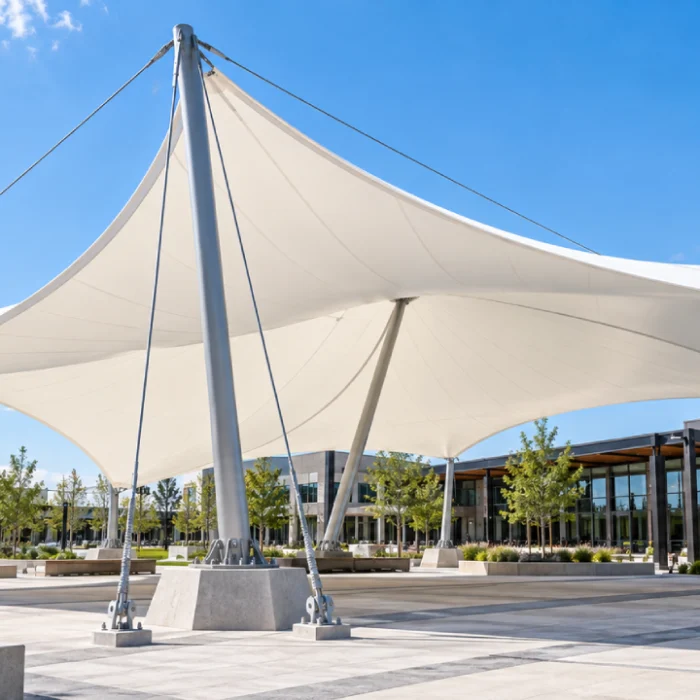
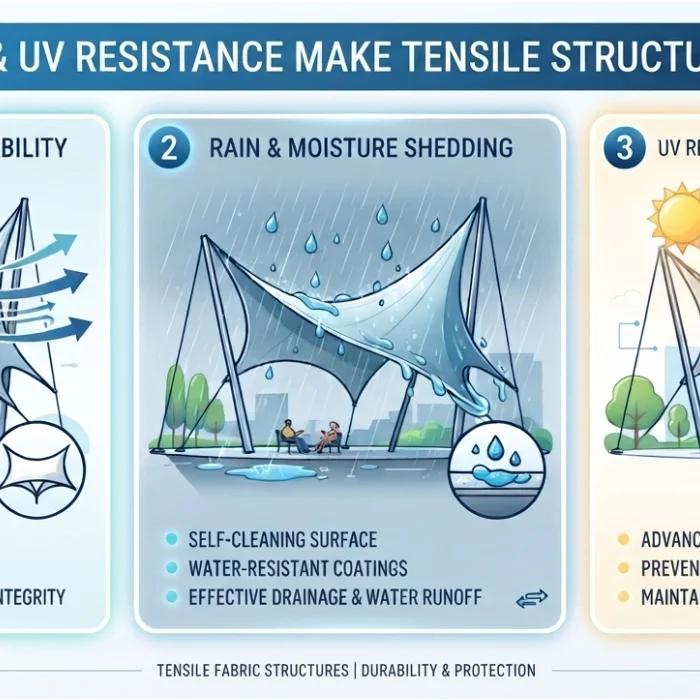
However, long-term performance depends on more than the appearance of the structure. Wind resistance, rain protection, UV resistance, quality materials, proper engineering, installation, and maintenance all contribute to the durability of a tensile structure.(https://en.wikipedia.org/wiki/Tensile_structure?utm_source)
PVC Tensile Fabric
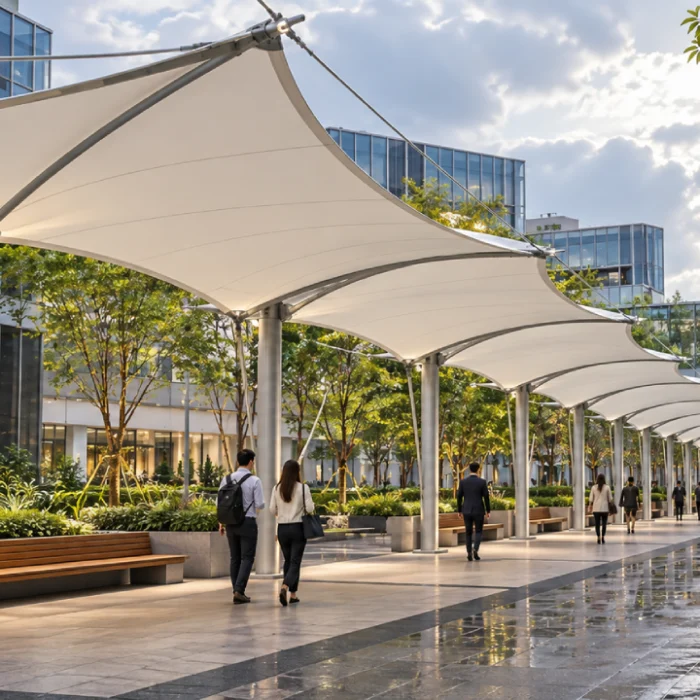
PVC-coated polyester fabric is the most commonly used tensile membrane because of its affordability and versatility. It provides good weather resistance, is available in multiple colors, and is suitable for both temporary and permanent structures.
Advantages
- Car parking shades
- Walkways
- Commercial canopies
- Event structures
- Outdoor seating areas
Lifespan
Approximately 10–20 years, depending on the coating quality and environmental conditions.
PTFE Tensile Fabric
PTFE-coated fiberglass is known for exceptional durability and long-term performance. It offers excellent resistance to fire, UV radiation, chemicals, and harsh weather. Its self-cleaning surface reduces maintenance costs over time.(https://en.wikipedia.org/wiki/Polytetrafluoroethylene?utm_source)
Advantages
- Extremely durable
- Self-cleaning surface
- Excellent fire resistance
- Low maintenance
- Long service life
Best Applications
- Stadium roofs
- Airports
- Exhibition halls
- Large public buildings
- Permanent architectural structures
Lifespan
Typically 25–30+ years with proper installation and maintenance.
ETFE Film
Unlike PVC and PTFE, ETFE is a transparent fluoropolymer film rather than a woven fabric. It allows up to 95% natural daylight, making it an excellent lightweight alternative to glass. ETFE is highly recyclable, self-cleaning, and extremely lightweight.
Advantages
- Exceptional transparency
- Very lightweight
- High UV resistance
- Self-cleaning
- Energy-efficient daylight transmission
- Recyclable material
Best Applications
- Skylights
- Glass replacement roofs
- Botanical gardens
- Stadium facades
- Modern commercial buildings
Lifespan
Generally 25–35+ years, with many installations lasting even longer under proper conditions.
Which Material Should You Choose?
- Choose PVC if your project requires a budget-friendly and reliable tensile membrane for commercial shading or temporary structures.
- Choose PTFE if you need maximum durability, low maintenance, and a long-lasting solution for large public buildings.
- Choose ETFE if your design requires maximum natural light, transparency, energy efficiency, and a modern architectural appearance.
Conclusion
There is no single “best” tensile fabric—it depends entirely on your project requirements. PVC is ideal for economical projects, PTFE is perfect for long-term durability, and ETFE is the premium choice for transparent, lightweight architectural designs. Evaluating your budget, expected lifespan, maintenance requirements, and design goals will help you select the most suitable material.
Frequently Asked Questions (FAQ)
1. What is the difference between PVC, PTFE, and ETFE tensile fabrics?
PVC is an affordable coated polyester fabric suitable for general-purpose tensile structures. PTFE is a fiberglass fabric coated with Teflon, offering superior durability and low maintenance. ETFE is a transparent fluoropolymer film known for its lightweight properties and excellent natural light transmission.
2. Which tensile fabric has the longest lifespan?
ETFE and PTFE typically have the longest lifespan. PTFE structures generally last 25–30 years or more, while ETFE can last 25–35 years or longer with proper maintenance. PVC usually lasts between 10–20 years.
3. Which tensile fabric is the most cost-effective?
PVC is the most cost-effective option. It provides good weather resistance and durability at a lower price, making it ideal for commercial canopies, parking shades, and walkways.
4. Is ETFE better than glass?
Yes. ETFE is much lighter than glass, allows up to 95% natural light, is highly durable, and offers better impact resistance. It is widely used in stadium roofs, skylights, and modern architectural buildings.