How Tensile Structures Support Sustainable & Green Building Design
10 August 2026
How Tensile Structures Support Sustainable & Green Building Design
Sustainable construction has become a top priority in modern architecture as businesses, governments, and developers seek environmentally responsible building solutions. One of the most effective innovations supporting this movement is the tensile structure. Known for its lightweight design, durability, and architectural appeal, tensile fabric structures are transforming commercial, industrial, and public infrastructure projects worldwide.
Unlike conventional roofing systems, tensile structures require fewer construction materials, reduce energy consumption, and offer long-term environmental benefits. Their ability to combine aesthetics with engineering efficiency makes them an ideal choice for green building design. Whether used in airports, schools, hospitals, shopping malls, sports facilities, parking areas, or resorts, tensile structures provide sustainable solutions without compromising performance or visual appeal. In this article, we’ll explore how tensile structures support sustainable and Green Building(https://en.wikipedia.org/wiki/Green_building)design and why they are becoming a preferred choice for modern construction projects
What Are Tensile Structures?
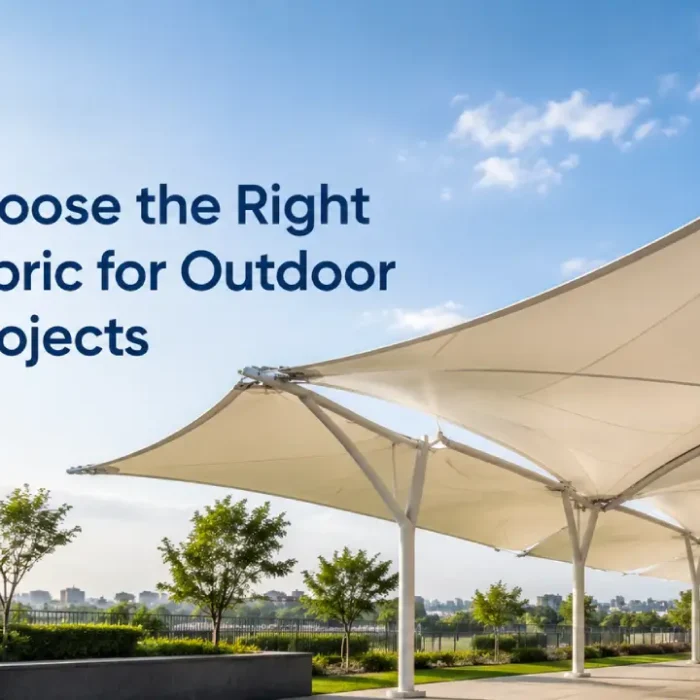
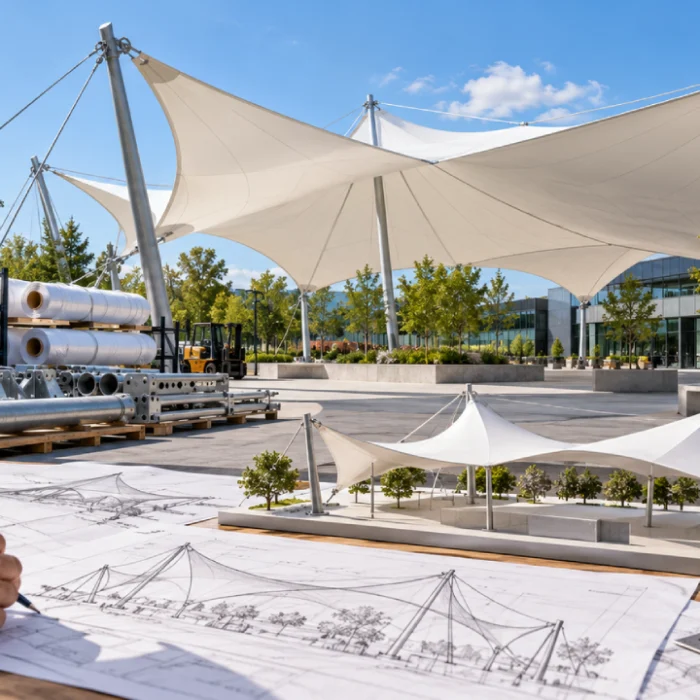
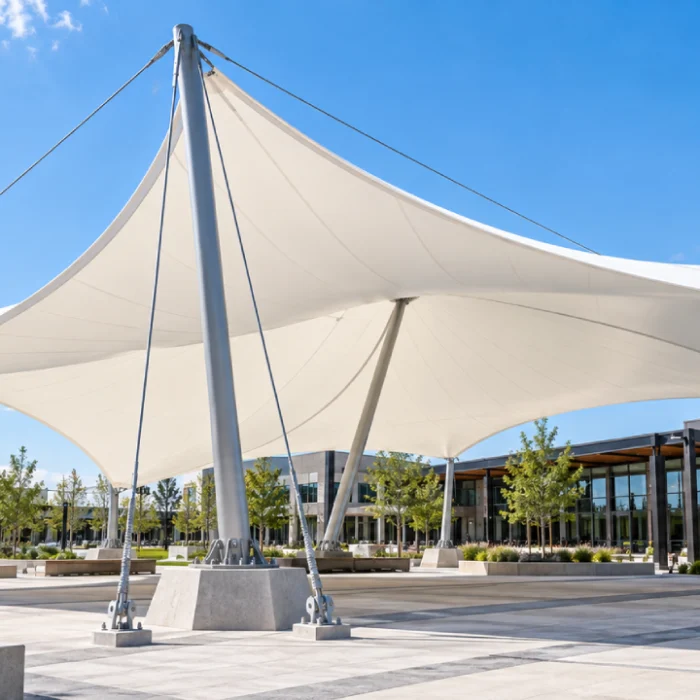
Tensile structures are lightweight architectural systems that use high-strength fabric membranes stretched over steel or cable frameworks. The tension created within the fabric provides structural stability while allowing for large, column-free spaces.
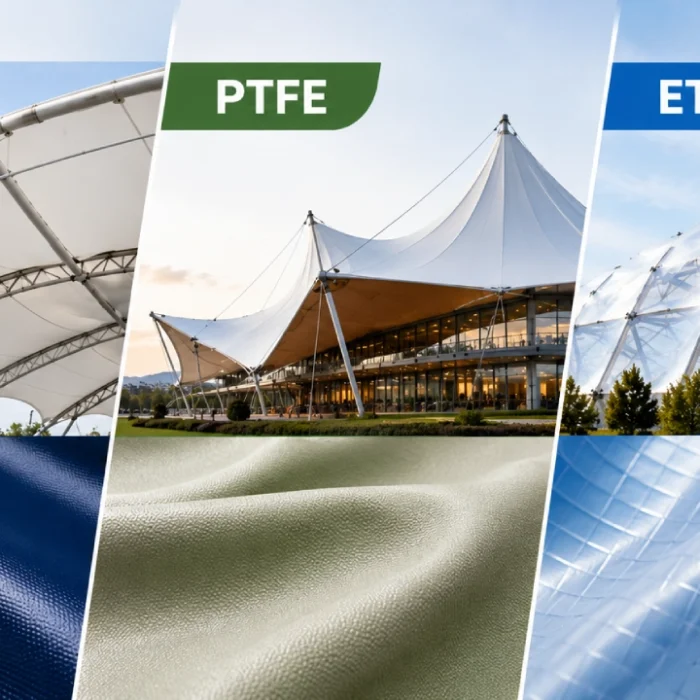
Common Materials Used in Tensile Structures
- PVC-Coated Polyester Fabric
- PTFE-Coated Fiberglass Fabric
- ETFE Membrane
- Galvanized Steel Cables
- Structural Steel Framework
These materials are selected for their durability, weather resistance, flexibility, and long service life.
Why Sustainable Construction Matters?
The construction industry is one of the largest consumers of natural resources. Traditional building methods often require large quantities of concrete, steel, and energy, leading to higher carbon emissions and environmental impact.
Green building practices aim to:
- Reduce energy consumption
- Minimize carbon emissions
- Use recyclable materials
- Improve indoor comfort
- Enhance natural ventilation
- Lower maintenance requirements
- Extend building lifespan
Tensile structures contribute significantly to achieving these sustainability goals.
Benefits of Tensile Structures for Sustainable & Green Building Design
1. Lightweight Construction Reduces Material Usage
One of the key advantages of tensile structures is their lightweight design. Unlike traditional roofs, they require significantly less steel and concrete while covering large areas efficiently.
Benefits
- Reduced steel consumption
- Lower concrete usage
- Smaller foundation requirements
- Easier transportation
- Lower construction costs
- Reduced carbon footprint
Using fewer construction materials directly supports sustainable development.
2. Natural Daylighting Improves Energy Efficiency
Modern tensile fabrics are designed to allow natural daylight to pass through while blocking excessive heat and harmful UV rays.
Advantages
- Reduces dependence on artificial lighting
- Lowers electricity consumption
- Creates brighter indoor environments
- Enhances occupant comfort
- Improves workplace productivity
Natural lighting is one of the major contributors to green building efficiency.
3. Lower Carbon Footprint
Because tensile structures use fewer raw materials and require lighter support systems, they generate fewer carbon emissions during manufacturing, transportation, and installation.
Environmental Benefits
- Lower greenhouse gas emissions
- Reduced fuel consumption
- Less environmental impact
- Sustainable construction process
These factors make tensile structures a responsible choice for environmentally conscious projects.
4. Recyclable and Eco-Friendly Materials
Many components used in tensile structures can be recycled after their service life.
Examples include:
- Steel Framework
- Steel Cables
- Aluminum Connectors
- Certain Tensile Fabric Membranes
Recycling reduces landfill waste and conserves valuable natural resources.
5. Reduced Construction Waste
Most tensile structures are prefabricated before reaching the construction site.
This provides several benefits:
- Minimal material wastage
- Faster installation
- Cleaner construction sites
- Reduced disposal costs
- Lower environmental impact
Compared to traditional construction methods, tensile structures generate significantly less waste.
6. Faster Installation Saves Resources
Since most components are manufactured in advance, installation takes considerably less time.
Benefits
- Reduced labor costs
- Lower machinery usage
- Faster project completion
- Reduced fuel consumption
- Less disruption to surrounding areas
Efficient construction helps conserve both time and resources.
7. Excellent Weather Resistance
High-quality tensile membranes are designed to withstand harsh weather conditions.
They provide protection against:
- Heavy rainfall
- Strong winds
- UV radiation
- Dust and pollution
- Extreme temperatures
Their durability minimizes repairs and replacements, making them a sustainable long-term investment.
8. Improved Thermal Performance
Advanced tensile fabrics reflect a significant amount of solar heat while allowing natural light to enter.
Benefits
- Reduced indoor temperatures
- Lower cooling costs
- Better ventilation
- Increased occupant comfort
- Improved energy savings
This contributes to year-round energy efficiency.
9. Supports Green Building Certifications
Tensile structures help projects meet the requirements of internationally recognized green building standards.
These include:
- LEED (Leadership in Energy and Environmental Design)
- IGBC (Indian Green Building Council)
- GRIHA (Green Rating for Integrated Habitat Assessment)
Their energy-efficient design and sustainable materials contribute toward achieving these certifications.
10. Long Service Life
Modern tensile structures are built for durability.
Typical lifespan:
- PVC Fabric: 15–20 years
- PTFE Fabric: 25–35 years
- ETFE Systems: 30+ years
Their long service life reduces replacement costs, conserves resources, and supports sustainable construction.
Applications of Sustainable Tensile Structures
Tensile structures are widely used in:
- Airports
- Railway & Metro Stations
- Shopping Malls
- Hospitals
- Schools & Colleges
- Universities
- Hotels & Resorts
- Sports Stadiums
- Swimming Pools
- Car Parking Areas
- Industrial Warehouses
- Restaurants & Cafés
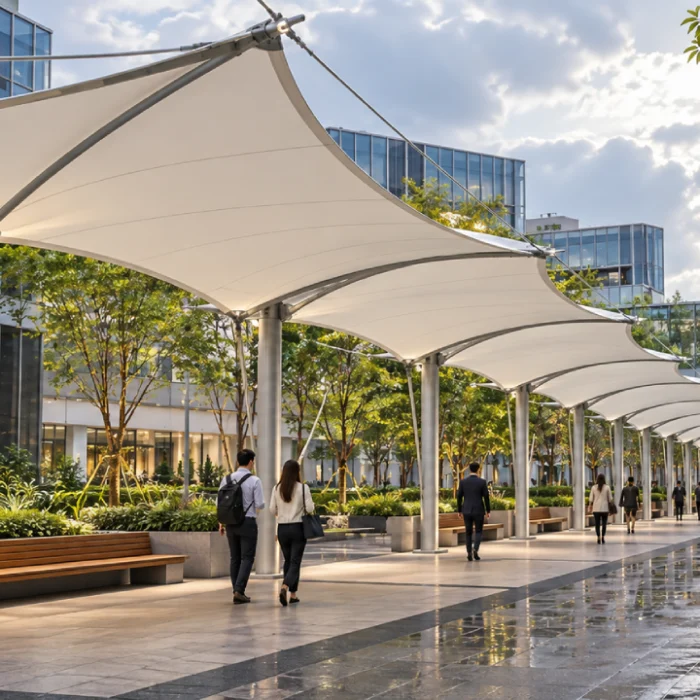
- Walkways
- Garden Spaces
- Convention Centers
- Petrol Pumps
- Children’s Playgrounds
Their versatility makes them suitable for almost every commercial and public infrastructure project.
Why Choose Arya Engineering?
Arya Engineering designs and manufactures premium-quality tensile structures that combine innovative engineering with sustainable construction practices.
We provide:
- Customized Tensile Structure Designs
- Premium PVC, PTFE & ETFE Fabric Solutions
- Advanced Structural Engineering
- Professional Fabrication & Installation
- Weather-Resistant Structures
- Low-Maintenance Solutions
- Long-Lasting Performance
- Eco-Friendly Construction
- Cost-Effective Tensile Roofing Systems
Whether your project is commercial, industrial, educational, hospitality, or public infrastructure, Arya Engineering delivers reliable tensile solutions tailored to your requirements.
Conclusion
Sustainable construction is no longer just a trend—it is a necessity for creating environmentally responsible buildings. Tensile structures offer an ideal combination of lightweight construction, energy efficiency, recyclable materials, weather resistance, and long-term durability. Their ability to reduce resource consumption while enhancing architectural appeal makes them an excellent solution for modern green building design.
As industries continue to prioritize sustainability, tensile structures will play a vital role in shaping the future of eco-friendly architecture. Partnering with experienced professionals like Arya Engineering ensures high-quality, innovative, and sustainable tensile solutions for projects of every scale.
Frequently Asked Questions (FAQ)
1. Are tensile structures environmentally friendly?
Yes. Tensile structures use fewer materials, reduce energy consumption, and incorporate recyclable components, making them an environmentally friendly construction solution.
2. How do tensile structures improve energy efficiency?
They offer UV protection, rain shelter, spacious column-free designs, modern aesthetics, and durable performance, making them ideal for busy public transportation facilities.
3. What materials are commonly used in tensile structures?
PVC-coated polyester, PTFE-coated fiberglass, ETFE membranes, galvanized steel cables, and structural steel frameworks are commonly used.
4. Can tensile structures help achieve green building certifications?
Yes. They support certifications such as LEED, IGBC, and GRIHA by improving energy efficiency, reducing material consumption, and promoting sustainable construction practices.
5. How long do sustainable tensile structures last?
Depending on the membrane material, tensile structures typically last between 15 and 35+ years, with proper installation and maintenance.