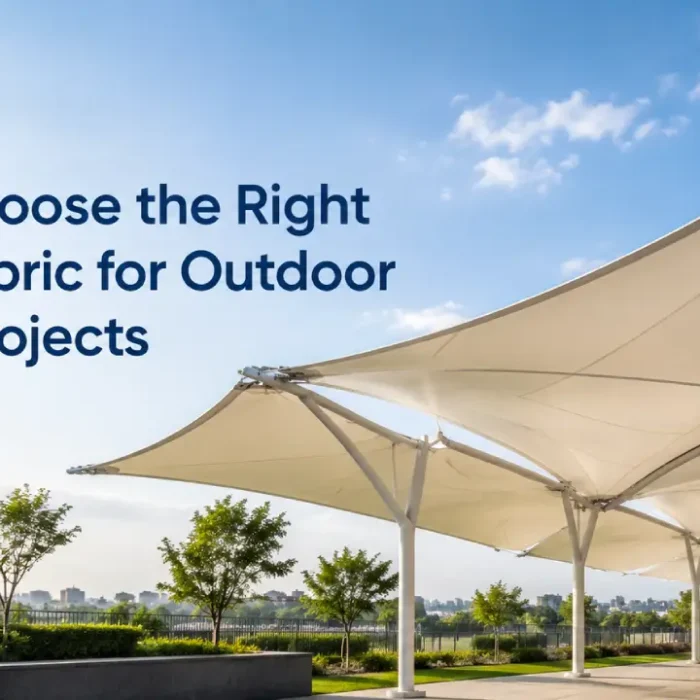
How to Choose the Right Tensile Fabric for Outdoor Roofing Projects
1 October 2026
Custom Tensile Structures: From Concept and Design to Fabrication and Installation
Outdoor roofing plays an important role in protecting spaces from direct sunlight and changing weather conditions. For commercial buildings, industrial facilities, parking areas and public infrastructure, the roofing solution must meet functional requirements while complementing the surrounding architecture.
A tensile fabric for outdoor roofing offers a flexible approach to creating covered spaces using a tensioned membrane and an engineered supporting framework. However, selecting the right fabric involves more than comparing colours, appearance or initial cost. Site conditions, environmental exposure, structural requirements, drainage and maintenance must all be considered before finalising a roofing system.
Understanding these factors helps architects, contractors and property owners make informed decisions and select a tensile roofing solution suited to their project.
What Is Tensile Fabric for Outdoor Roofing?
Tensile fabric is a specialised membrane used in roofing systems where the material is stretched and supported by an engineered framework. The membrane’s shape and tension work together with the supporting structure to create the intended roof geometry.
Unlike conventional roofing materials installed as rigid panels, tensile membranes can form curved, conical, saddle-shaped and other architectural profiles, depending on the structural design.
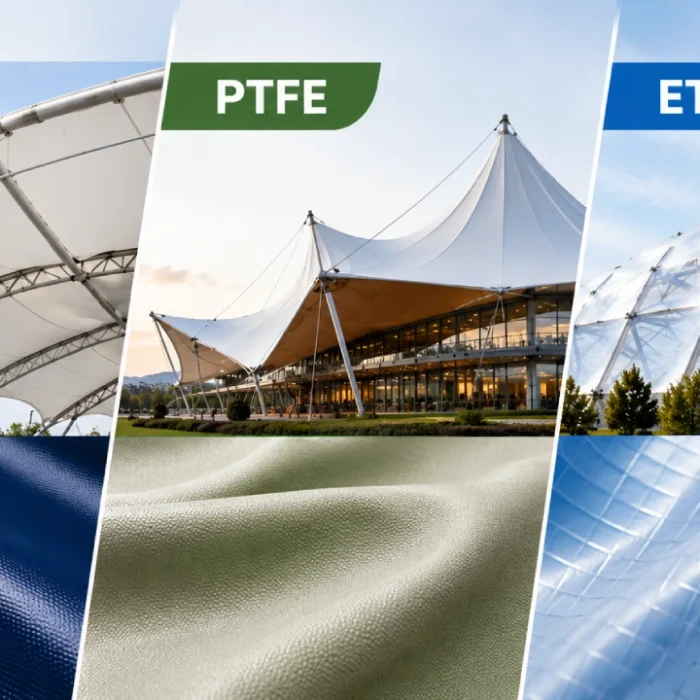
Common materials used in tensile roofing include PVC-coated polyester and PTFE-coated glass fibre. ETFE is another material used in selected architectural applications, particularly where transparency and daylight transmission are important.
Each material has different properties and application requirements. The final choice should be based on the intended use, environmental conditions, design specifications and project budget.
Key Factors to Consider Before Selecting Tensile Fabric
1. Understand the Project Requirements
The first step is to define what the roofing structure needs to achieve. A fabric selected for a car parking shade may have different requirements from one used for a commercial entrance canopy or a large covered public space.
Before choosing the membrane, identify:
- The purpose and dimensions of the covered area
- The expected usage and movement of people or vehicles
- The required level of sunlight and rain protection
- The desired architectural appearance
- Any specific operational or regulatory requirements
Clear project requirements help narrow down suitable material options and establish the basis for the structural design.
2. Evaluate Site and Weather Conditions
Outdoor tensile roofs are exposed to environmental conditions that can influence material selection and structural performance.
Sunlight, ultraviolet radiation, rainfall, wind exposure, dust and local environmental conditions should be assessed before the design is finalised.
For example, a structure installed in an exposed industrial site may require different considerations from a canopy located within a sheltered commercial complex.
Important factors include:
- Local wind conditions and applicable design requirements
- Expected rainfall and drainage requirements
- Direct sunlight and UV exposure
- Environmental pollutants or corrosive conditions
- Accessibility for installation and future maintenance
The fabric should be selected according to documented product specifications and the conditions expected at the installation site.
3. Compare Fabric Specifications, Not Just Material Names
Different tensile membrane materials have different performance characteristics. Even fabrics within the same material category may vary according to their construction, coating, thickness and manufacturing specifications.
When evaluating material options, review the technical documentation for:
- Tensile strength and relevant mechanical properties
- UV resistance and weathering performance
- Coating characteristics and water resistance
- Fire-performance classification, where required
- Light transmission and colour options
- Cleaning and maintenance recommendations
PVC-coated polyester and PTFE-coated glass fibre are established options for tensile roofing applications. The appropriate specification depends on the project rather than a universal preference for one material.
For a detailed comparison of available membrane types, refer to Arya Engineering’s tensile roofing solutions.
4. Consider the Roof Design and Supporting Structure
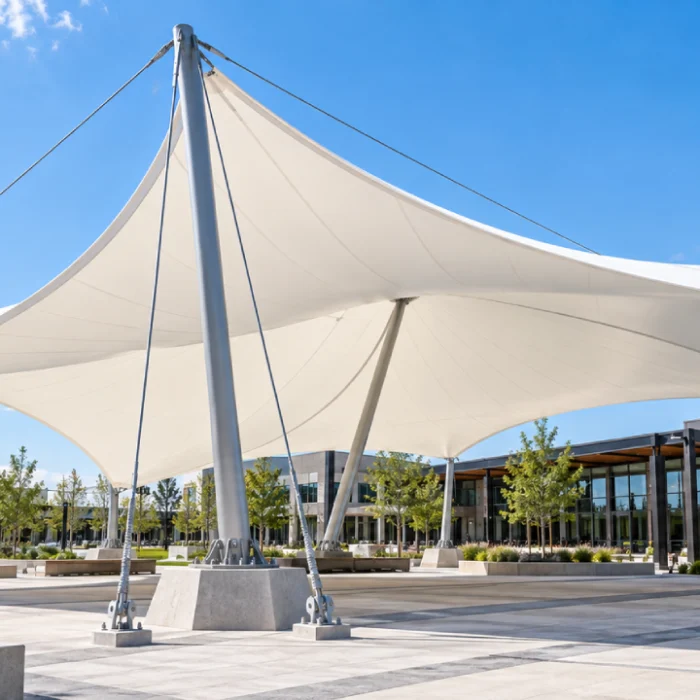
The membrane and supporting framework must be designed as one structural system. Selecting a fabric without considering the proposed geometry, support locations and applied loads can lead to design and installation challenges.
A professional engineering assessment should consider:
- Roof span and overall dimensions
- Membrane geometry and tensioning requirements
- Steel framework and connection details
- Anchorage and foundation conditions
- Wind loads and other applicable structural loads
- Installation tolerances and inspection requirements
Arya Engineering’s project process includes site assessment, design development and structural calculations, helping align the proposed structure with the project’s functional and engineering requirements.
A suitable membrane specification must work with the structural design, rather than being selected independently.
5. Check Rainwater Drainage and Roof Geometry
Rainwater management is an essential part of outdoor tensile roofing design. The shape and slope of the membrane influence how water flows across the roof and reaches the drainage points.
Poorly planned drainage can contribute to water accumulation and unwanted loading on the membrane.
Before installation, ensure that the design accounts for:
- Suitable roof geometry and drainage slopes
- Membrane tension and expected deformation
- Drainage outlets and discharge locations
- Nearby structures that may affect water flow
- Access for drainage inspection and cleaning
Drainage should be addressed during the design stage and coordinated with the structural system.
6. Assess Sunlight, Shading and Visual Requirements
The appearance and light-transmission properties of a tensile membrane affect how the covered space looks and functions.
For a parking shade, reducing direct sunlight may be a key priority. For a commercial entrance or architectural feature, the desired balance between shading, daylight and visual appearance may be different.
When comparing materials, review their documented optical properties, including light transmission, colour and opacity.
Also consider the building’s orientation, the surrounding environment and the intended use of the covered space.
Selecting a membrane based on these requirements helps ensure that the finished roof delivers the intended functional and architectural outcome.
7. Evaluate Installation and Maintenance Requirements
A tensile roofing project involves more than supplying fabric. Accurate fabrication, appropriate installation procedures, correct tensioning and final inspection are important to the performance of the complete structure.
Before approving a proposal, understand the scope of work and how each stage will be managed.
Consider:
- Site measurements and design approvals
- Membrane fabrication and edge finishing
- Supporting framework fabrication
- Installation and tensioning procedures
- Inspection of connections and structural components
- Maintenance instructions and warranty documentation
Routine inspection and suitable cleaning can help identify issues early. Maintenance frequency depends on the material, exposure conditions and manufacturer’s recommendations.
Understanding these requirements before installation helps with long-term planning and project management.
Where Is Outdoor Tensile Roofing Used?
Tensile roofing can be adapted to different applications when the material, geometry and supporting structure are designed for the intended purpose.
Car Parking Structures
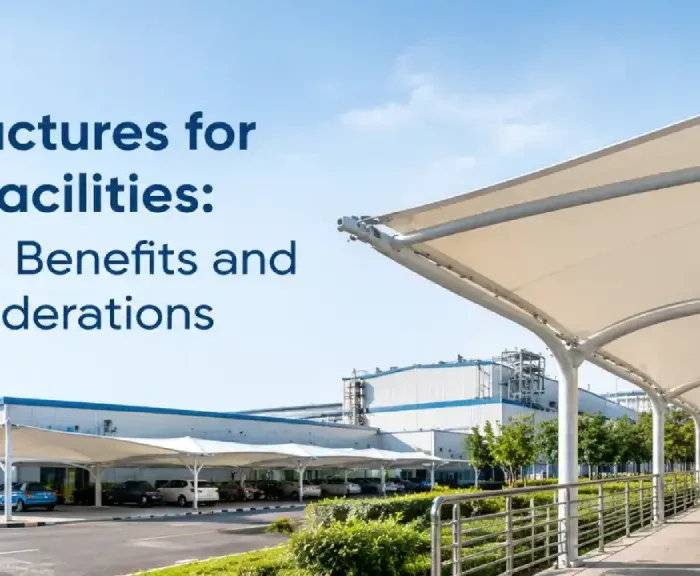
Tensile fabric roofs can provide shade over parking spaces at commercial properties, residential developments and industrial facilities. Design considerations include parking layouts, vehicle clearances, site exposure and structural supports.
Entrance Canopies
Entrance canopies provide a covered approach to buildings while contributing to the architectural appearance of the entrance. The design should consider pedestrian movement, drainage and integration with the existing building.
Covered Walkways
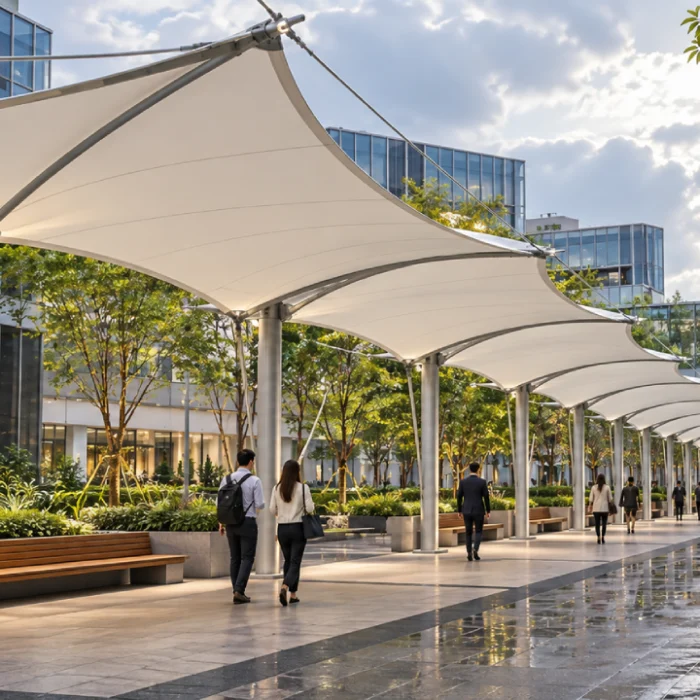
Tensile walkway covers can create protected routes between buildings and across commercial or public spaces. The roof layout should provide appropriate coverage while maintaining clear circulation.
Commercial and Industrial Spaces
Tensile structures can be used in selected outdoor operational areas, common spaces and other facilities requiring overhead coverage. The design must account for the site’s functional requirements, environmental conditions and applicable structural specifications.
Explore Arya Engineering’s tensile structure offerings for examples of its application areas.
Common Mistakes to Avoid When Choosing Tensile Roofing Fabric
Choosing a suitable membrane is easier when potential issues are considered before the project begins.
Selecting fabric based only on price: A low initial price does not establish whether the material meets the required performance specifications.
Ignoring environmental exposure: Sunlight, rainfall, wind and site conditions should inform both material selection and structural design.
Overlooking drainage: Membrane geometry and drainage arrangements must be coordinated to manage rainwater effectively.
Treating fabric and structure separately: The membrane, supporting framework, connections and foundations must be designed to work together.
Skipping maintenance planning: Cleaning access, inspections and manufacturer recommendations should be considered before the structure is handed over.
Avoiding these mistakes supports a more coordinated approach to design, fabrication and installation.
Why Choose Arya Engineering for Tensile Roofing Solutions?
Arya Engineering provides tensile structure solutions for commercial, industrial and architectural applications, including roof covers, car parking structures, entrance canopies, walkways and open-space covers.
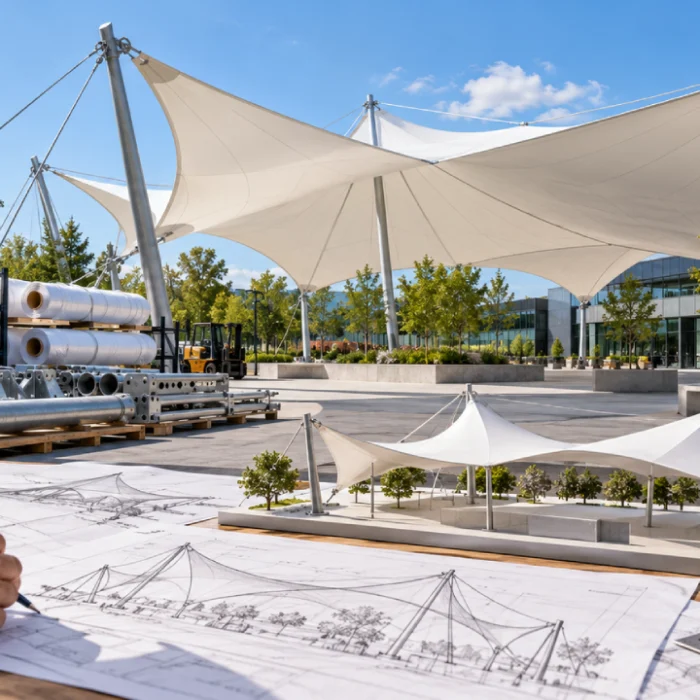
Its project process includes understanding client requirements, assessing site conditions, developing designs, carrying out structural calculations, selecting materials, fabricating components and completing installation.
This coordinated approach helps ensure that the roofing solution is developed around the intended application and relevant engineering requirements.
For architects, contractors, developers and property owners, discussing the project requirements with an experienced tensile structure provider can help establish a suitable design and material specification.
Learn more about Arya Engineering’s tensile structure solutions.
Frequently Asked Questions (FAQs)
1. Which fabric is suitable for outdoor tensile roofing?
PVC-coated polyester and PTFE-coated glass fibre are commonly used for tensile roofing. The appropriate choice depends on the application, environmental exposure, design requirements, material specifications and budget.
2. Is tensile fabric suitable for outdoor weather conditions?
Membranes designed for outdoor applications can provide protection from sunlight and rain. Their suitability for particular weather conditions depends on the product specifications, structural design, installation and maintenance.
3. What should I check before purchasing tensile roofing fabric?
Review the fabric’s technical specifications, UV resistance, mechanical properties, coating characteristics, fire-performance classification where required, light transmission and maintenance recommendations. The material should also be suitable for the proposed structural design.
4. Why is structural engineering important for tensile roofing?
Structural engineering considers the membrane geometry, tensioning, wind loads, supporting framework, connections and foundations. These elements must work together to achieve the intended structural performance.
5. Does tensile fabric roofing require maintenance?
Yes. Periodic inspections, appropriate cleaning and checks of the membrane, connections, supporting framework and drainage system help identify potential issues. Maintenance should follow the manufacturer’s recommendations and the conditions at the installation site.
6. What determines the cost of a tensile roofing project?
The cost depends on the roof dimensions, membrane specifications, structural design, framework, foundation requirements, site conditions, fabrication and installation scope. Maintenance and warranty terms should also be considered when comparing quotations.
Choose the Right Outdoor Roofing Solution with Arya Engineering
Selecting tensile fabric for outdoor roofing requires a balanced assessment of the intended application, environmental exposure, membrane specifications, structural design and maintenance requirements.
A carefully planned project helps align the material and supporting structure with the functional needs of the site.
Arya Engineering provides tensile structure solutions tailored to a range of commercial, industrial and architectural applications.
Contact Arya Engineering to discuss your outdoor roofing requirements and explore a suitable tensile structure solution.
Contact Arya Engineering
Phone: +91 9325383807
Website: https://arya-engineering.in/
Email: ho@arya-engineering.in